
Hospitality
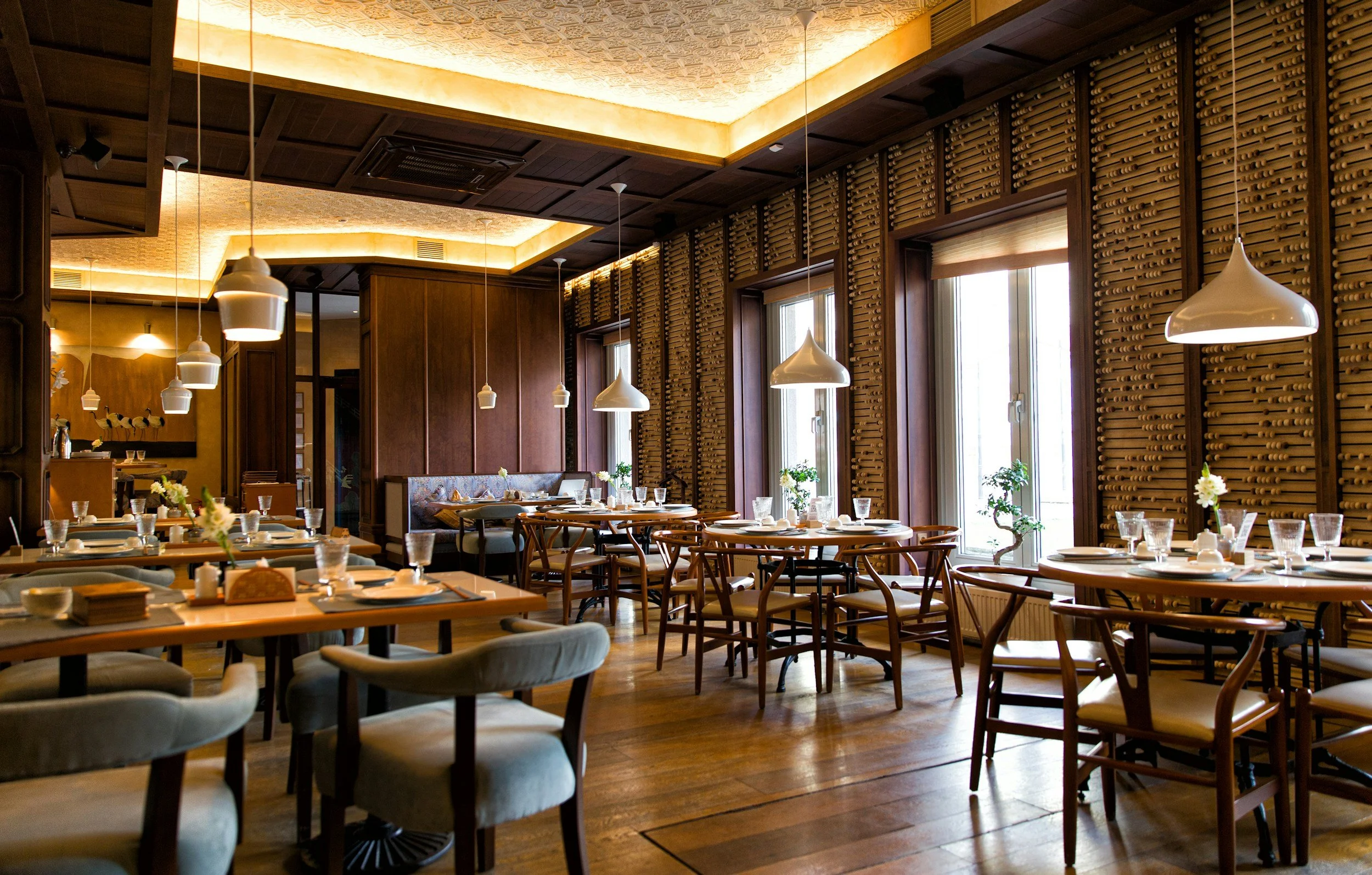
How to stop people getting sick in your restaurant
People get sick in restaurants through three routes: food contaminated during handling, surfaces touched by many hands, and air shared in a full dining room or a cramped kitchen. Food-safety practice and hand hygiene deal with the first two and are non-negotiable. The third, airborne transmission of influenza, COVID and the aerosols released when someone vomits with norovirus, is the one most restaurants have no control for at all.
A ceiling-mounted 222 nm far-UVC unit adds that control: it inactivates airborne and surface pathogens continuously while the room is full, with no chemicals, noise or downtime. The Frido ProTech 2 is installed in restaurants on cruise ships, which are restaurants with the hardest conditions of any: full every night, low ceilings, recirculated air and guests who eat there for a week, as well as in a London restaurant.
The controls
| Control | What it addresses | What it does not address |
|---|---|---|
| Food safety (temperature control, allergen and cross-contamination management, supplier checks) | Food-borne pathogens: Salmonella, Campylobacter, E. coli, Listeria, norovirus in food | Transmission between people |
| Sick-staff policy (symptomatic staff excluded for 48 hours after vomiting or diarrhoea) | Norovirus and other gastroenteritis entering the kitchen through staff | Staff who are infectious before symptoms |
| Hand hygiene (sinks, soap, sanitiser at the door and in the kitchen) | Surface-to-hand-to-mouth transmission | Airborne transmission; compliance drops when busy |
| Surface cleaning on a schedule, and immediate response to a vomiting incident | Surfaces between cleans; the incident itself | Everything that happens between cleans |
| Ventilation | Dilutes airborne pathogens | Limited by the building and needs a strong breeze to be effective; often poor in older premises and basements; does nothing for surfaces |
| Far-UVC (222 nm), running continuously in dining room, bar, kitchen and staff areas | Airborne viruses and bacteria, and exposed surfaces, between cleans and while the room is full | Food contamination, shadowed surfaces, heavy soiling; it is a layer, not a replacement |
Where units go in a restaurant
A Frido placement plan for a restaurant typically covers, in priority order:
The dining room, with units spaced to cover the whole seated area at the stated ceiling height
The bar and any standing or queuing area
The kitchen pass and prep areas, where staff work shoulder to shoulder for long shifts
Staff room, changing room and staff toilets
Customer toilets and the corridor to them
For a 100-cover restaurant this is typically 8 units. Units are ceiling-recessed like downlights, run on mains power and connect over Wi-Fi; a group's restaurants can be managed as one estate.
What it does for the business
Fewer sick staff. Hospitality runs on thin rotas; one infectious chef or server in a kitchen can take out half the team within a week. Reducing the airborne load in staff areas, where people spend the longest, is where the unit earns its keep.
Fewer sick guests. Guests who get ill after a meal blame the food, whether or not the food was the cause, and say so in reviews. Reducing the airborne and surface load reduces the incidents and the reviews.
Less chemical fogging. Routine preventive fogging can stop in protected spaces; cleaners handle fewer caustic chemicals and guests breathe fewer volatile organic compounds. Incident cleaning is unchanged.
Something to show. Each unit logs the UV dose delivered and the room's occupancy, so an operator can show an environmental health officer, an insurer or a corporate client that the control is running.
What it costs
About 20 W per unit, less when the room is empty, and a lamp change every two to three years. No chemicals, filters or labour. Prices available on request. Frido provides the placement plan, commissioning and remote verification; installation is by your electrician.
FAQ
Will guests see or feel anything?
No. The light is invisible and silent; the unit looks like a ceiling fitting with a small status light.
Is it safe for staff who are in the room all day?
Yes, within the published exposure limits, which the unit is designed to stay inside for a full working day. The studies and the ICNIRP and ACGIH limits are on Is far-UVC safe?.
Does it replace cleaning after a vomiting incident?
No. Dried organic matter shields norovirus on surfaces, so the affected area still needs targeted chemical cleaning. The far-UVC layer deals with the aerosol the incident released.
Does it affect food?
At the ceiling-to-table distances in a dining room the dose on food is small and 222 nm light does not penetrate packaging or more than a few micrometres into a food surface.
References
Welch D, Buonanno M, Tang Z, et al. 222 nm far-UVC to inactivate airborne bacteria in an occupied dental clinic. J Hosp Infect 2025. https://doi.org/10.1016/j.jhin.2025.11.015
Buonanno M, Kleiman NJ, Welch D, et al. 222 nm far-UVC light markedly reduces the level of infectious airborne virus in an occupied room. Sci Rep 2024;14:6722. https://doi.org/10.1038/s41598-024-57441-z
Buonanno M, Welch D, Shuryak I, Brenner DJ. Far-UVC light (222 nm) efficiently and safely inactivates airborne human coronaviruses. Sci Rep 2020;10:10285. https://doi.org/10.1038/s41598-020-67211-2
Kristensen MA, Mogensen EH, Nielsen SY, Holm CK. The potential effectiveness of far-UVC (222 nm) in preventing infections in long-term care facilities: a six-month nonrandomized controlled phase II trial. Antimicrob Steward Healthc Epidemiol 2026;6:e165. https://doi.org/10.1017/ash.2026.10425
Updated: October 2026